As someone who has had some experience with trying to make a website rank on Google, chances are high that you have come across the concepts of on-page and off-page SEO. The problem is that these two concepts are used very frequently without much information about what the difference between the two actually is or why you should use them together. After several years of handling SEO in-house, I can safely say that the companies which understand the concept of using both approaches are the ones who are successful in the end.
This article will show you how to properly use on-page and off-page SEO, provide you with a case study from a small company’s website that I have worked on and finally provide you with my own checklist.
What Is On-Page SEO?
Word Count
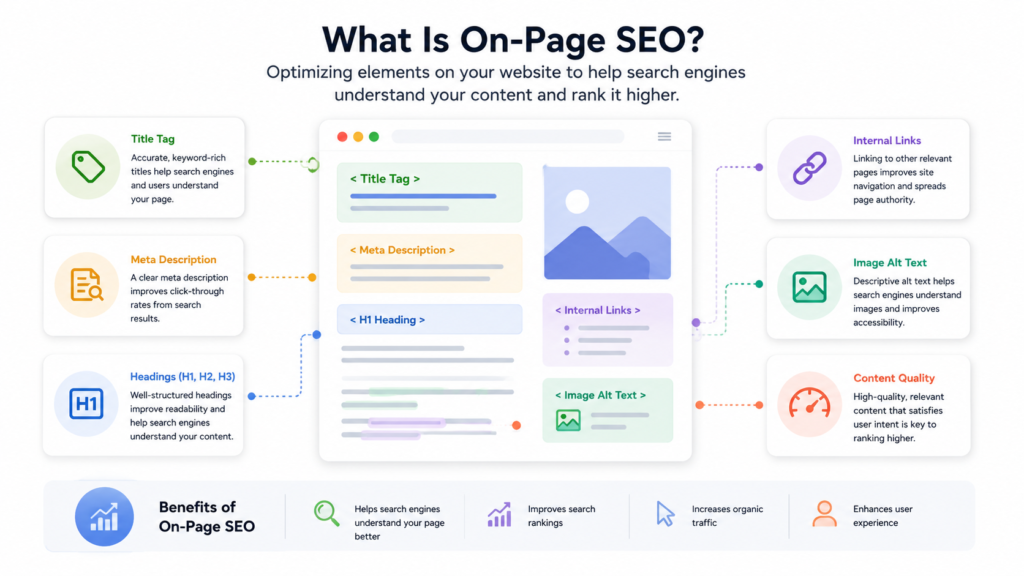
On-page SEO is all about the factors which you can manipulate yourself right from your website – from content to heading tags, URL optimization to internal linking and even the technical stuff such as page speed and image optimization. In simple terms, on-page SEO includes all the signals that search engines can pick up from the page itself.
It is here that most people get confused – the idea that on-page SEO is all about inserting keywords is totally wrong. Search engines have grown much smarter than simply matching words and have become adept at figuring out context and user intent. Google’s own documentation on the basic of SEO would serve as a great guide in this regard.
Core Elements of On-Page SEO
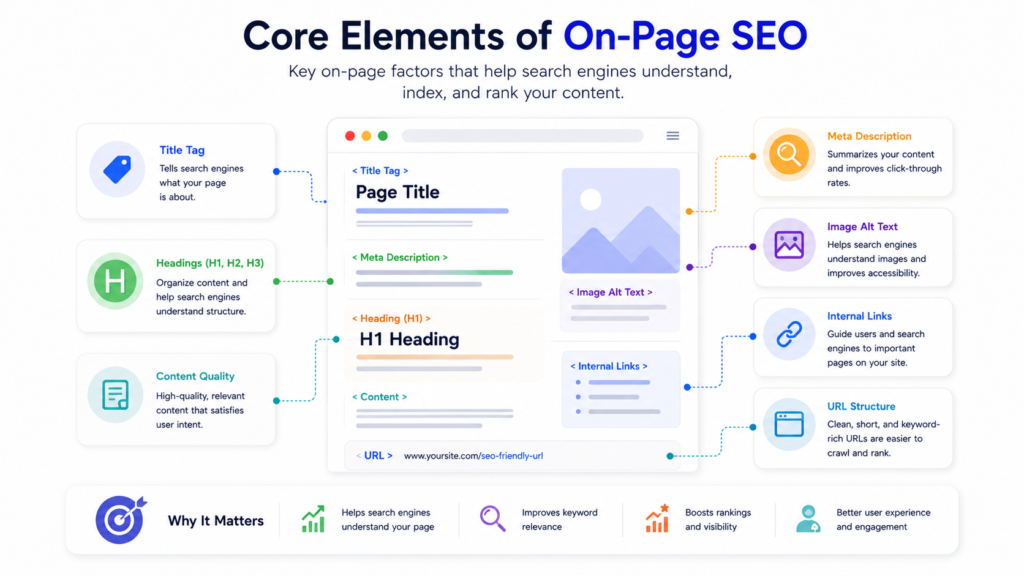
URL structure that’s short easy to read and connected to the keyword
Heading hierarchy that includes one H1, well-organized H2s and H3s to make content simple to look through
You should also have links inside your website that connect to pages that are related to each other. This helps your website because it shares the importance across all the pages.
You need to make sure your images are good too. This means you have to make them smaller so they do not take long to load and you have to add words that describe what is, in the image.
zation includes all activities that are done off-site but contribute to your website’s image both in search engines and in the eyes of potential customers. I believe that the most crucial element here is the backlinking – obtaining links to your website from other pages. As per my own experience, building links is the most effective off-page technique that beats any social mention and citation individually.
As you can see, the principle behind the backlinking is simple: links from trustworthy sites give you credit and make your content worth citing. However, not all links are equal. That is where novices usually make mistakes.
Core Elements of Off-Page SEO
The things that are important for Off-Page SEO are
* Building Backlinks from websites this is like getting a vote of confidence from other people
* Doing Digital PR to get people talking about your website and getting links from big websites that everyone knows
* Getting your business listed in directories and citations this is really important if you have a local business
* Writing guest posts for websites that are about the same things as your website
* Getting your brand name mentioned on media and, in the press this helps people know who you are and what you do with Off-Page SEO and Backlinks and Digital PR.
A Real Example: Fixing On-Page SEO for a Local Business
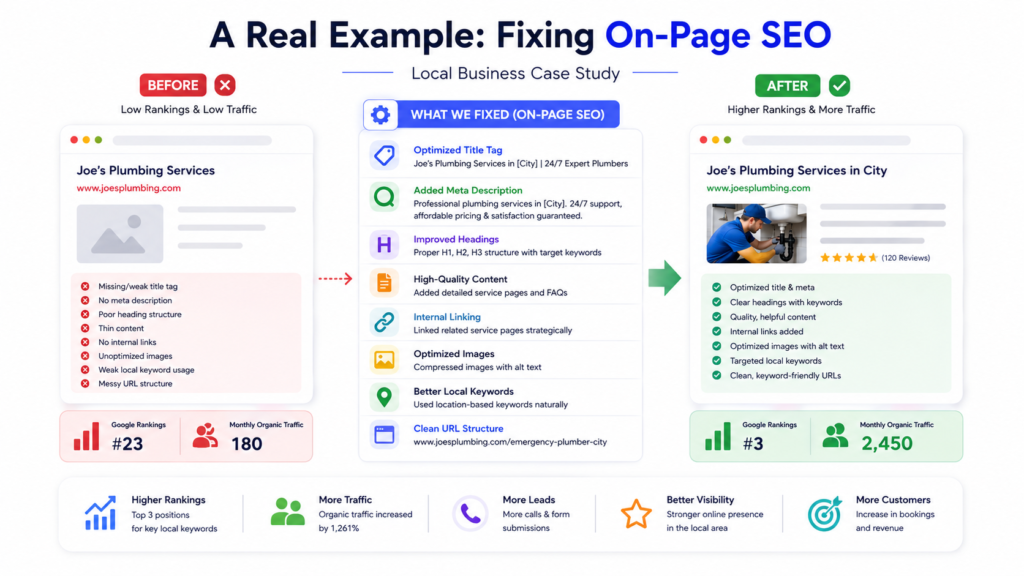
A years ago I worked on a local business website. This website was having a time showing up in search results even when people searched for the business name.
So we decided to make some changes to the website. We rewrote the content, on the website to match what people were actually looking for. We also changed the headings to make them clearer.
The metadata was a mess so we cleaned that up. We added links to pages on the website that were related to the content. We fixed the problem that was making the website load slowly. We did all of this to help the local business website show up in search results for searches.
The results were noticeable fairly quickly. Keyword rankings improved, organic traffic increased, and the site’s overall visibility in search results got noticeably better. Nothing about that project involved shortcuts — it was methodical, page-by-page work. That’s usually how sustainable SEO wins happen; there’s r
On the on-page side it is about keyword stuffing. This means putting a keyword into every sentence when you are writing something that a person would actually want to read. The thing is, it sounds strange and search engines are very good at figuring out when you are doing this.
On the off-page side it is about looking for low-quality backlinks. If you get a lot of links from sites that do not matter or are full of spam it will not help you all. In fact it can make people not trust you or your website. It is much better to get links from sites that really relate to your work and what you do.
The solution to both of these problems is really simple: write for people first. Use keywords in a natural way. You should also get backlinks based on being relevant and being good, at what you do of just trying to get a lot of links. This way search engines will see that your website is trustworthy and has content and people will want to visit your website because it is helpful and interesting.
My Step-by-Step On-Page SEO Checklist
Here is how I conduct my work when optimizing pages, and I do it in this manner:
Keyword Research – Understanding target keyword and the search intent of the audience.
Title Tag, Meta Description, URL and H1 Optimization with Primary Keyword;
Content Writing and Optimization using Primary and Secondary Keywords.
Proper formatting of the page with headings and subheadings.
Image Optimization (Reduction of Image size and Alt Text).
Linking – Internal and External.
Checking for technical aspects including site speed, mobile usability, and Core Web Vitals.
And finally checking for readability and usefulness of the page.
Following this order matters. Skipping straight to keyword insertion without understanding intent, for example, tends to produce content that technically checks boxes but doesn’t actually rank or convert.
On-Page and Off-Page SE: Quick Comparison
Factor
On-Page SEO
Off-Page SEO
Where it happens
Directly on your website
Outside your website
Main focus
Content, structure, technical health
Backlinks, mentions, reputation
You control it
Fully
Partially (you influence, others decide)
Example action
Optimizing a title tag
Earning a backlink from an industry site
Typical timeline
Faster to implement
Slower, relationship-driven
Frequently Asked Questions
Do I have to apply on-page or off-page SEO, or do I need to apply both? Yes, indeed, I need to apply both. On-page SEO will ensure that all those things which are required for ranking my website on search engines are there in my website, while off-page SEO will ensure that my website gets credibility to rank on the search engines.
What should I concentrate on while starting my website? First of all, I have to ensure that I concentrate only on on-page SEO initially. What is the point of concentrating on links from the other websites to my website when I haven’t even prepared my website for those links? Once everything is prepared then, I can think about the links.
How much time will it take for off-page SEO to produce results? Off-page SEO takes more time than on-page SEO as far as relationship-building and linking of credible content to your website is concerned.
Final Takeaways
Nonetheless, it is important to remember that on-page and off-page SEO approaches cannot be regarded as contradictory. The purpose of on-page SEO is to ensure that your website is readable, relevant and correct from a technical point of view. The good backlinks will make you look authoritative and trustworthy.